Wheat Harvesting in Pakistan Begins | Essential Guidelines for Farmers
As the wheat harvesting season begins in several regions of Pakistan and is expected to spread across the country in the coming days, it is crucial for farmers to adopt careful and efficient practices during harvesting, threshing, and storage. Proper management at this stage ensures maximum yield quality, reduces post-harvest losses, and secures the wheat for longer storage.
Begin Harvesting Only When the Crop is Fully Mature
Harvesting wheat too early or too late can negatively impact grain quality and yield. Farmers are strongly advised to start harvesting only when the crop is fully ripe. Look for visual signs such as golden-colored stems and firm, dry grains as indicators of readiness.
گندم کی جلد یا بہت دیر سے کٹائی اناج کے معیار اور پیداوار پر منفی اثر ڈال سکتی ہے۔ کسانوں کو سختی سے نصیحت کی جاتی ہے کہ جب فصل پوری طرح پک جائے تب ہی کٹائی شروع کریں۔ تیاری کے اشارے کے طور پر بصری علامات جیسے سنہری رنگ کے تنوں اور مضبوط، خشک دانے تلاش کریں۔
Keep a Close Eye on Weather Forecasts
Unpredictable weather, especially rain, can damage harvested wheat. Farmers should regularly listen to weather updates through radio or television. In case of expected rainfall:
• Make smaller bundles after cutting.
• Arrange the bundles with wheat heads facing upwards.
• Store the bundles on higher ground to prevent waterlogging.
• Create small drainage channels around the bundles to allow water to flow out.
غیر متوقع موسم ، خاص طور پر بارش ، کٹائی شدہ گندم کو نقصان پہنچا سکتی ہے ۔ کسانوں کو باقاعدگی سے ریڈیو یا ٹیلی ویژن کے ذریعے موسم کی تازہ ترین خبریں سننی چاہئیں ۔ متوقع بارش کی صورت میں:
بنڈلوں کے ارد گرد نکاسی آب کے چھوٹے چینل بنائیں تاکہ پانی باہر نکل سکے ۔
کاٹنے کے بعد چھوٹے بنڈل بنائیں ۔
بنڈلوں کو گندم کے سروں کے ساتھ ترتیب دیں جن کا رخ اوپر کی طرف ہو ۔
پانی کے جمع ہونے سے بچنے کے لیے بنڈلوں کو اونچی زمین پر رکھیں ۔
Prefer Modern Harvesting Methods
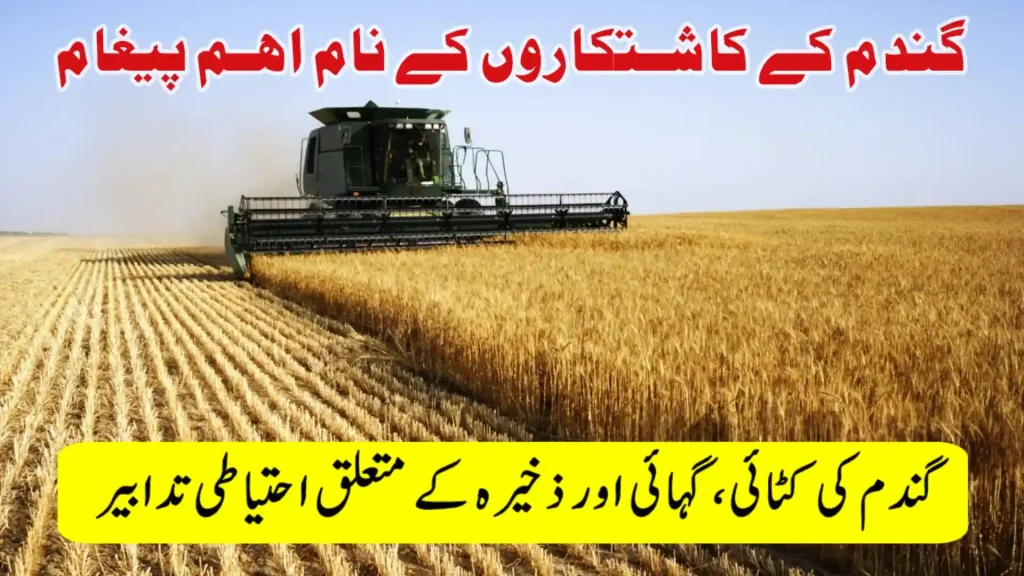
Using machinery such as reapers or combine harvesters significantly improves efficiency and reduces crop exposure in the field. A combine harvester helps complete the process quickly and ensures a cleaner harvest.
To manage the leftover straw efficiently, attach a wheat straw chopper to the combine harvester. This ensures better field management and prepares the land for the next crop cycle.
کاٹنے والی یا کمبائن کٹائ کرنے والی مشینری کا استعمال کارکردگی کو نمایاں طور پر بہتر بناتا ہے اور کھیت میں فصل کی نمائش کو کم کرتا ہے ۔ کمبائن ہارویسٹر عمل کو تیزی سے مکمل کرنے میں مدد کرتا ہے اور صاف فصل کو یقینی بناتا ہے ۔
بقیہ بھوسے کو مؤثر طریقے سے سنبھالنے کے لیے ، گندم کے بھوسے کا ہیلی کاپٹر کمبائن ہارویسٹر سے منسلک کریں ۔ یہ کھیت کے بہتر انتظام کو یقینی بناتا ہے اور زمین کو اگلے فصل کے چکر کے لیے تیار کرتا ہے ۔
Prepare Warehouses for Storage Ahead of Time
At least one month before harvesting begins, clean and empty all storage warehouses thoroughly. A clean and pest-free storage environment is essential to avoid spoilage.
• Use well-ventilated storage facilities.
• Prefer new storage sacks. If reusing old ones, dry them in sunlight and treat with an appropriate pesticide solution.
• Ensure moisture content in the stored grain is no more than 10%.
کٹائی شروع ہونے سے کم از کم ایک ماہ پہلے ، تمام ذخیرہ شدہ گوداموں کو اچھی طرح سے صاف اور خالی کریں ۔ خراب ہونے سے بچنے کے لیے ایک صاف اور کیڑوں سے پاک ذخیرہ کرنے کا ماحول ضروری ہے ۔
اچھی ہوا دار اسٹوریج سہولیات کا استعمال کریں ۔
اسٹوریج کے نئے تھیلوں کو ترجیح دیں ۔ اگر پرانے کو دوبارہ استعمال کیا جائے تو انہیں دھوپ میں خشک کریں
اور کیڑے مار ادویات کے مناسب محلول سے علاج کریں ۔
اس بات کو یقینی بنائیں کہ ذخیرہ شدہ اناج میں نمی کا مواد 10% سے زیادہ نہیں ہے ۔
Use Approved Pesticides to Prevent Pest Infestation
Before storing the wheat, spray the warehouse using recommended pesticide solutions. Consult local agricultural experts to ensure the right treatment is used. This step is vital for long-term pest protection and helps maintain the quality of the stored grain.
گندم کو ذخیرہ کرنے سے پہلے تجویز کردہ کیڑے مار ادویات کے حل کا استعمال کرتے ہوئے گودام پر چھڑکاؤ کریں ۔ صحیح علاج کے استعمال کو یقینی بنانے کے لیے مقامی زرعی ماہرین سے مشورہ کریں ۔ یہ قدم کیڑوں کے طویل مدتی تحفظ کے لیے اہم ہے اور ذخیرہ شدہ اناج کے معیار کو برقرار رکھنے میں مدد کرتا ہے ۔
Get Expert Advice via Agricultural Helpline
For any questions or technical guidance, wheat farmers can call the Agricultural Helpline anytime between Monday to Saturday, 8:00 AM to 8:00 PM.
Helpline Number: 0800-17000
This free service connects you to local agriculture experts for professional advice.
مزید جانیں: درآمد شدہ گندم مقامی گندم سے سستی کیوں ہے


